


Hi Pablo! What's your background, and what are you currently working on?
I’m Pablo, a 37-year-old entrepreneur, and programmer, originally from Buenos Aires, but currently based in London, UK after having lived in many different countries.
I remember exactly the day when I started coding, it was my 7th birthday. My birthday present was a computer and on those days, they came with manuals with code to copy and play with and that’s what I did when I got bored of the games. Except for a brief interlude in which I tried to be a musician, I coded pretty much my whole life. These days, as a side project, I’m building I’m OK, a little tool to help my friends with isolation, feeling sad, depressed, etc.
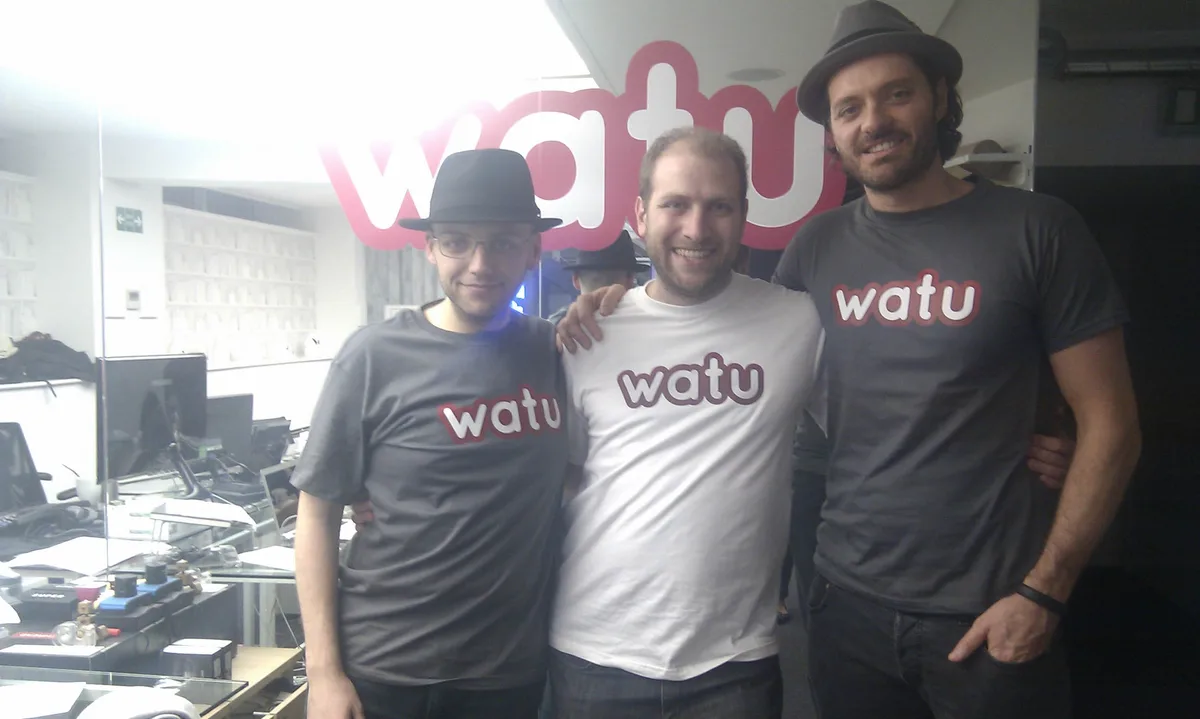
Watu was an application for temporary staffing agencies. For example, when Samsung needed a lot of people to be at the booths to show their phones during the 2012 Olympics, they hired a temporary staffing agency, which in turn used Watu to define the jobs, the teams, who works when, where, shifts, payroll, reviews, etc. I was the CTO at Watu for the first couple of years. I wrote the first line of code, hired the developers, etc. 2 years later or so I became the CEO when my business partner left.
What motivated you to start Watu?
Any ideas I have tend to be the sort of ideas a software developer can have because that’s who I am. Those tend to have a lot of competition and generally good competition. I wanted to work on those niches that you’ve never heard of. Those can be a gold mine, a consistent gold mine. At the same time Jules, a friend of a friend was searching for a CTO to build his idea. I’ve never met him before, but he pitched Watu to me and I was immediately sold.
Before starting Watu, Jules was running several staffing agencies of various kinds and was very well connected and respected in the industry. This ended up being a bit of a challenge because other staffing companies didn’t want to share their private books with us, but eventually, they understood we weren’t trying to steal their customers. He also commissioned various applications built for his own company which gave him experience in what an app like Watu was supposed to do.
How did you build it?
For the first 9 months or so, it was just my business partner and me. I started the project using Ruby on Rails. The project didn’t have anything particularly complex but it was big with lots of, let’s call them, modules. I developed the concept of wide and narrow products when working at Watu. Some products are narrow, like Twitter, while some products are wide, like LinkedIn. In a narrow product, you can polish more while in a wider product you need to tick boxes and move on to the next thing. I don’t think neither is intrinsically better, but knowing what you are doing is important.
One problem I ran into was the reliability of server uploads to AWS S3 when hosting the app in Heroku. My solution was to move to our own servers, hosting all the files in a GlusterFS cluster I set up. This was a mistake as it was a maintenance nightmare over the years. The day I turned off I was so relieved. I wish that I tried more workarounds to stay within Heroku and S3.
I remember we had the first customer up and running sometimes on month 6 or 7 but it took until the middle of the second year and our first hire for us to have the all-important job module that would allow companies to build jobs, shifts, teams, assign staff, track attendance and feedback. At that point, our value jumped and we started onboarding customers very consistently.